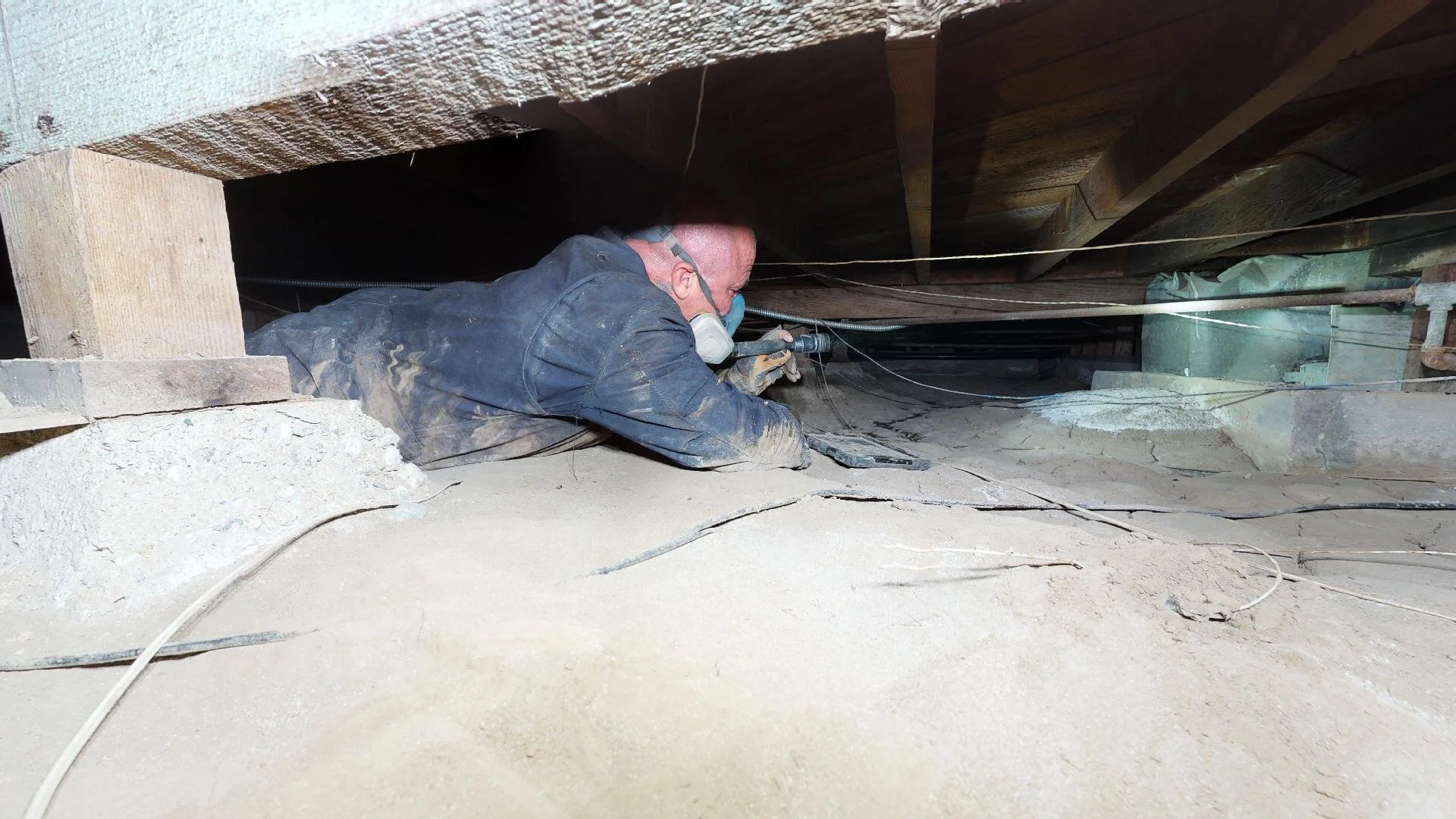
Crawl Space Inspection Tallahassee: Hidden Issues Found
Quick Answer: A crawl space inspection in Tallahassee evaluates moisture levels, vapor barrier condition, structural framing, insulation, ventilation, and signs of pests, mold, or water intrusion. Most issues found here trace back to one cause: humidity. The fixes range from simple vapor barrier replacements to major encapsulation projects. Catching problems early protects the structure, the air you breathe, and the home's resale value.
If you have a crawl space under your Tallahassee home, you have a humidity problem you can't see. That's not pessimism. That's a near-universal pattern after running thousands of crawl space inspections across Leon, Wakulla, Gadsden, and Jefferson counties since 2016. North Florida humidity, combined with year-round warm temperatures and our heavy rainfall, creates conditions where crawl space issues develop slowly and silently. A crawl space inspection in Tallahassee is the only way to find out what's actually happening down there before it costs you real money.
What's a Crawl Space, and Who Has One?
A crawl space is the shallow area between the ground and the first floor of your home, typically 18 to 36 inches tall. Older Tallahassee homes (especially pre-1990s in Killearn, Betton, Lafayette, Indianhead, and Myers Park) almost always have them. Many newer homes have slabs instead. Some homes have a partial crawl and a partial slab.
If you have one, it matters. Your floor framing, supply plumbing, drain plumbing, HVAC ducts, and sometimes electrical all live down there. What happens in the crawl space affects the whole house.
What I Look For in a Crawl Space
The inspection covers eight key areas:
1. Moisture Level
Using a pin or pinless moisture meter on framing members. Anything over 18% gets flagged. Over 28% means active wetting. Mold and rot start within days.
2. Vapor Barrier
Should cover most of the dirt floor with overlapping seams. I see them missing, torn, displaced, or installed with bare gaps. A failed vapor barrier means dirt moisture rises into the framing 24/7.
3. Standing Water or Saturated Soil
After heavy rain or with any plumbing leak above. I check the lowest points and any drainage channels.
4. Wood Rot
Sill plates, rim joists, floor joists, and posts. Probing with an awl tells me how soft the wood is. Rotted joist ends are common in older homes here.
5. Pest and Termite Evidence
Mud tubes, frass, droppings, dead bodies. Tallahassee's climate is heaven for termites. Subterranean termite damage often hides in crawl spaces.
6. Insulation Condition
Falling, sagging, wet, or moldy. A lot of older Killearn and Betton homes have batt insulation in the floor that's been wet for years.
7. Ventilation
Foundation vents, vapor flow, and air circulation. Older guidance was to vent crawl spaces. Newer guidance often favors encapsulation. Both work if installed right.
8. Signs of Past Water Intrusion
Stains, salt deposits, mineral lines on framing or piers. Tells me whether moisture is current or chronic.
Common Tallahassee Crawl Space Findings
Here's what I find most often:
- Damaged or missing vapor barrier (in roughly 70% of crawl spaces I inspect)
- Elevated moisture readings on joists (most homes over 20 years old)
- Insulation falling or saturated (very common)
- Plumbing leaks at supply lines, hose bibs, or drain transitions (slow leaks especially)
- HVAC duct disconnections or insulation failures (massive energy loss)
- Wood rot at sill plates near grade (especially with poor drainage)
- Termite tubes and prior treatment evidence (termites are part of life here)
- Standing water after rain (poor grading, missing gutters, or low spots)
What These Issues Cost If Ignored
A wet crawl space affects the home in three ways:
1. Structure. Sustained moisture rots framing. A rotted joist replacement can run into the thousands per area. Sill plate replacement can become a five-figure repair in serious cases.
2. Air Quality. Up to half the air you breathe in your home enters from below. Crawl space moisture, mold, and microbial growth circulate into living spaces. Health and odor issues follow.
3. Energy Costs. Wet insulation doesn't insulate. HVAC systems work harder. Power bills climb, sometimes noticeably every month.
That's not counting resale impact. Crawl space photos in a buyer's inspection report can scare a buyer out of a deal or trigger major repair credits.
Tallahassee-Specific Issues
A few things make our area different:
- Year-round humidity above 70%. Tallahassee almost never gets a true "dry season."
- High water table in low-lying areas. Parts of South Tallahassee and near lakes have shallow water tables that push moisture up.
- Heavy rainfall events. Tropical systems and summer storms push 2 to 4 inches in a single rain.
- Aggressive termite pressure. Subterranean termites are constant.
- Older homes with original framing. Many Killearn, Indianhead, and Betton homes still have 1960s and 1970s structural lumber that has weathered decades of humidity.
Should You Encapsulate?
Encapsulation seals the crawl space with a thick vapor barrier on the floor and walls, removes vents, and conditions the space (often with a dehumidifier). It works well in Tallahassee. The benefits:
- Drops crawl space humidity from 75 to 90% to under 60%
- Stops moisture migration into living spaces
- Improves indoor air quality
- Reduces energy bills (often noticeably)
- Makes the home easier to sell
The cost is significant and depends on square footage, complexity, and whether a dehumidifier is added. Worth it for many Tallahassee homes, especially older ones in the higher-priced neighborhoods.
Cheaper Fixes That Help
If you're not ready for full encapsulation, these often help:
- Replace the vapor barrier. Affordable as DIY or professional work. Simplest, biggest bang for buck.
- Fix grading and gutters. Stop water before it reaches the crawl. Often free if you DIY the gutters.
- Repair active plumbing leaks. Stops water at the source.
- Replace wet insulation. Cleaner, drier, more efficient.
- Add a dehumidifier. A moderate expense installed. Helps even without encapsulation.
When to Get Your Crawl Space Looked At
The crawl space is part of our residential home inspection, which follows the InterNACHI Standards of Practice and covers the crawl space wherever it can be safely accessed. It's worth booking a home inspection, even on a home you already own, if:
- You smell mustiness in living areas
- You see moisture issues on lower walls or in baseboards
- Your floors feel soft or springy in spots
- You're considering an encapsulation quote and want a second opinion
- You bought without an inspection and want to know where you stand
- You're prepping for a sale and want to address issues before listing
Why Local Experience Matters
Crawl spaces in Tallahassee have known patterns. An out-of-area inspector who's used to dry climates often misreads our moisture levels as catastrophic when they're actually normal for the region. The opposite happens too: serious problems get downplayed because the inspector doesn't know what high humidity does to North Florida framing over 20 years.
Related Reading
Frequently Asked Questions
How much does a crawl space inspection cost in Tallahassee?
The crawl space is checked as part of our residential home inspection, so there's no separate charge for it. The cost of the home inspection depends on the home's size; contact ACL Home Inspections for a quote.
Should I encapsulate my Tallahassee crawl space?
For most older homes, yes. Encapsulation reduces moisture, improves air quality, and lowers energy costs. The investment pays back over time.
How do I know if I have wood rot?
A trained inspector probes framing with an awl and uses a moisture meter. Visual signs include darkened wood, fungal growth, and soft spots. Don't ignore springy floors.
Are termites a guarantee in Tallahassee?
Active termite pressure is. Without ongoing treatment or bait stations, most older homes will eventually see termite activity. Annual inspections matter.
Can I inspect my own crawl space?
You can take a look, but the inspection requires equipment and experience to interpret what you see. Moisture meters, awls, and a flashlight in trained hands tell a much fuller story.
Do you serve Wakulla and Gadsden county crawl spaces?
Yes. ACL Home Inspections covers Tallahassee, Crawfordville, Quincy, Havana, Monticello, Perry, and the surrounding North Florida and Southwest Georgia communities.
Schedule Your Home Inspection
If you've never had your crawl space inspected, or it's been more than a few years, the time to check is before a problem shows up upstairs. Call or text ACL Home Inspections at 850-312-8919 or email Joel@ACLTally.com. We'll get under the home, document what's happening, and tell you exactly what (if anything) you need to do about it.
A Closer Look. Before You Buy or Sell, Let Us Take a Closer Look.